How to Turn First-Time Diners into Regulars with Guest Profiles


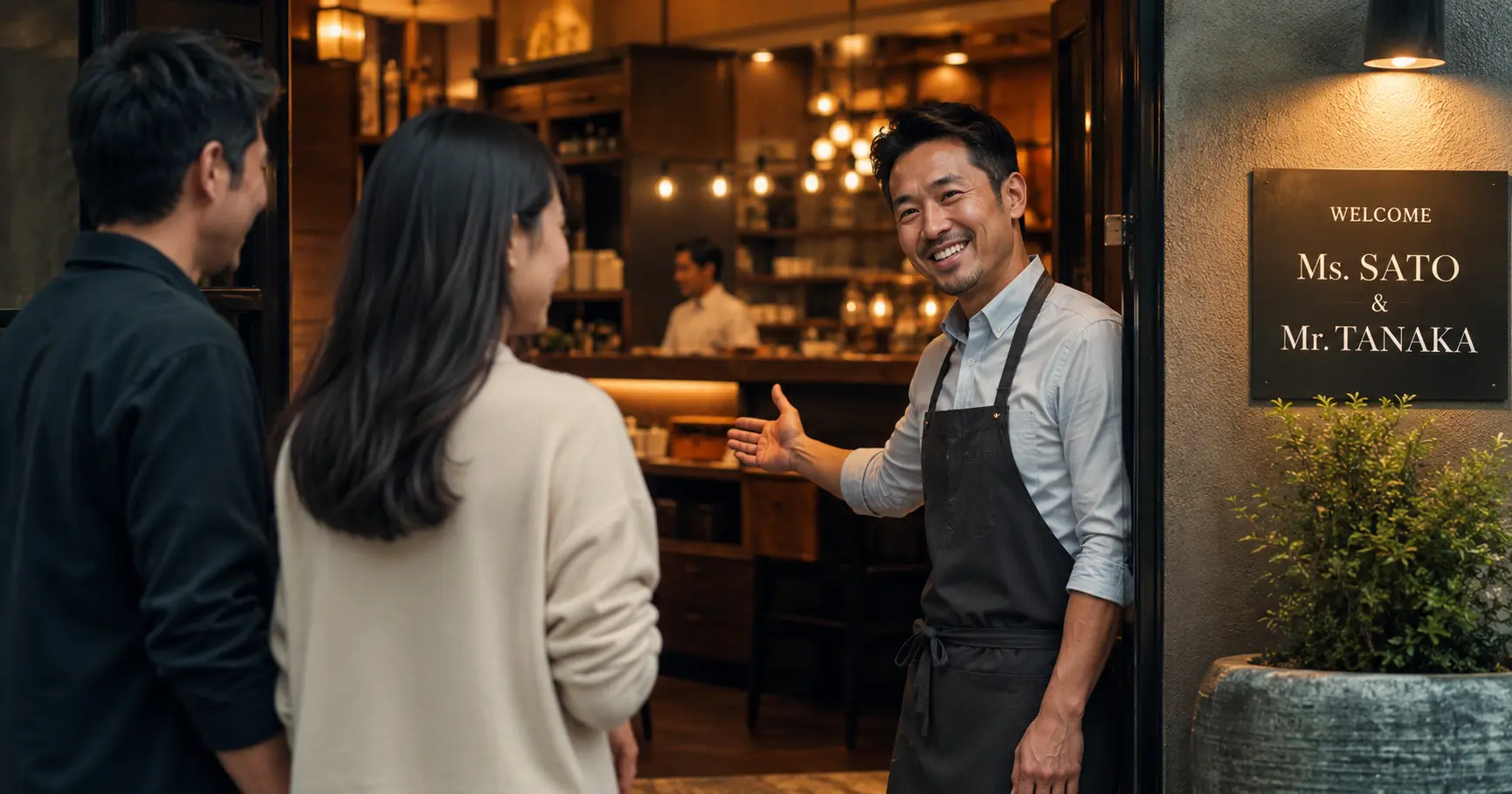
They loved the food. But will they come back?
Getting a guest through the door for the first time is hard work. Marketing, word of mouth, a good review, a lucky search result.
But getting them back? That is where the real money is.
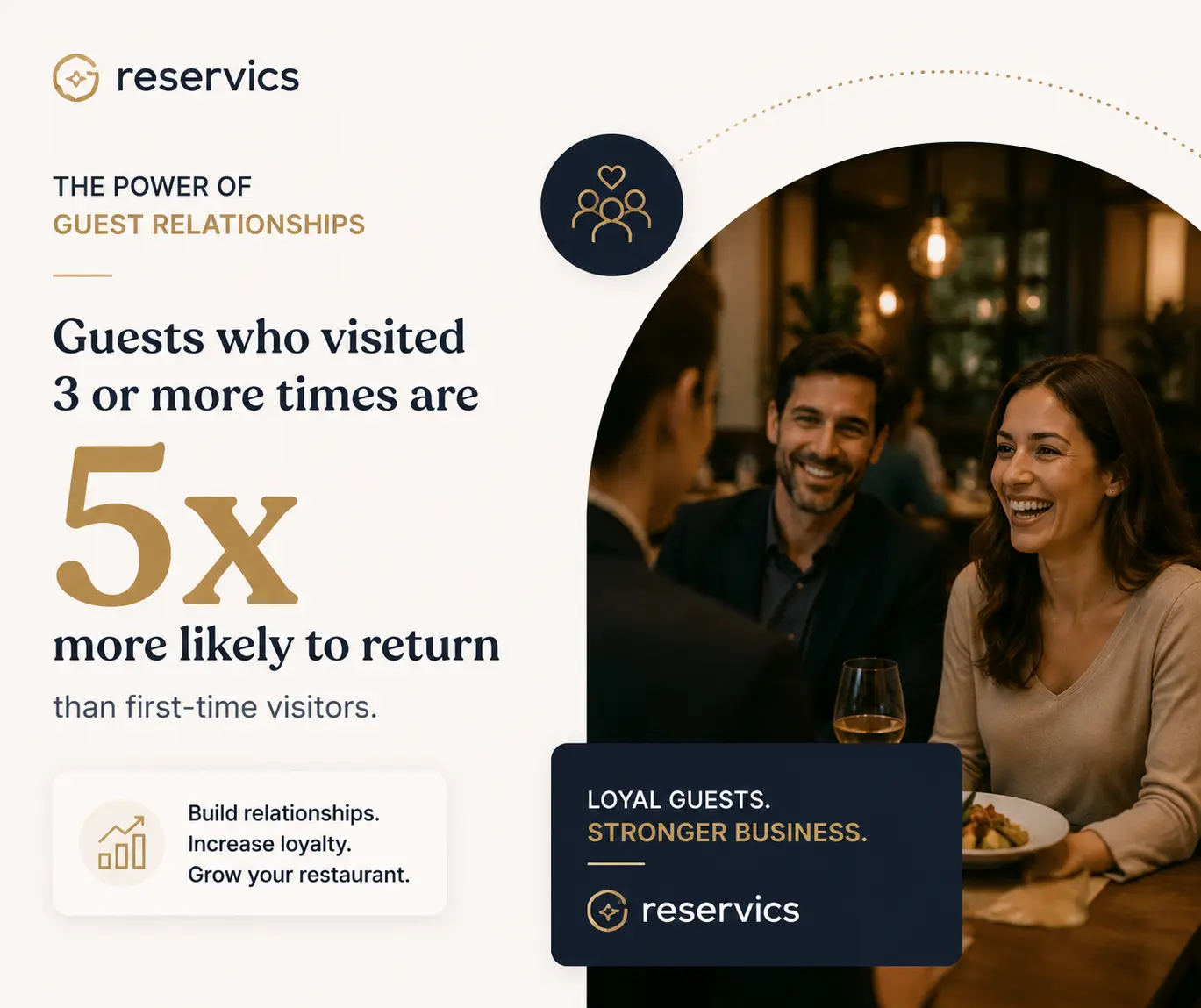
Research consistently shows that returning guests spend more per visit, book more often, and are far more likely to recommend your restaurant to others. The difference between a one-time visitor and a regular is almost never the food alone. It is how welcome they felt.
The good news is that every booking your restaurant takes contains data that can help you make every guest feel like a regular from their second visit onwards. Most restaurants never use it.
Here is how to start.
What you will learn:
- What guest profile data actually contains and why it matters
- 5 practical ways to use booking data to drive return visits
- How to build this system without adding work for your staff
- What a guest journey from first visit to loyal regular looks like
💡 Short Answer: How to Turn Restaurant Guests into Regulars
The most effective way to turn first-time diners into regulars is to remember them. Use booking data to track visit history, dietary preferences, favourite tables, and special occasions. Then use that information to make every return visit feel personal. Guests who feel remembered come back more often and spend more when they do.
What Your Booking Data Already Knows About Your Guests
Most restaurants think of their booking system as a diary. A place to check who is coming and when.
But every confirmed reservation builds a picture of the guest behind it.
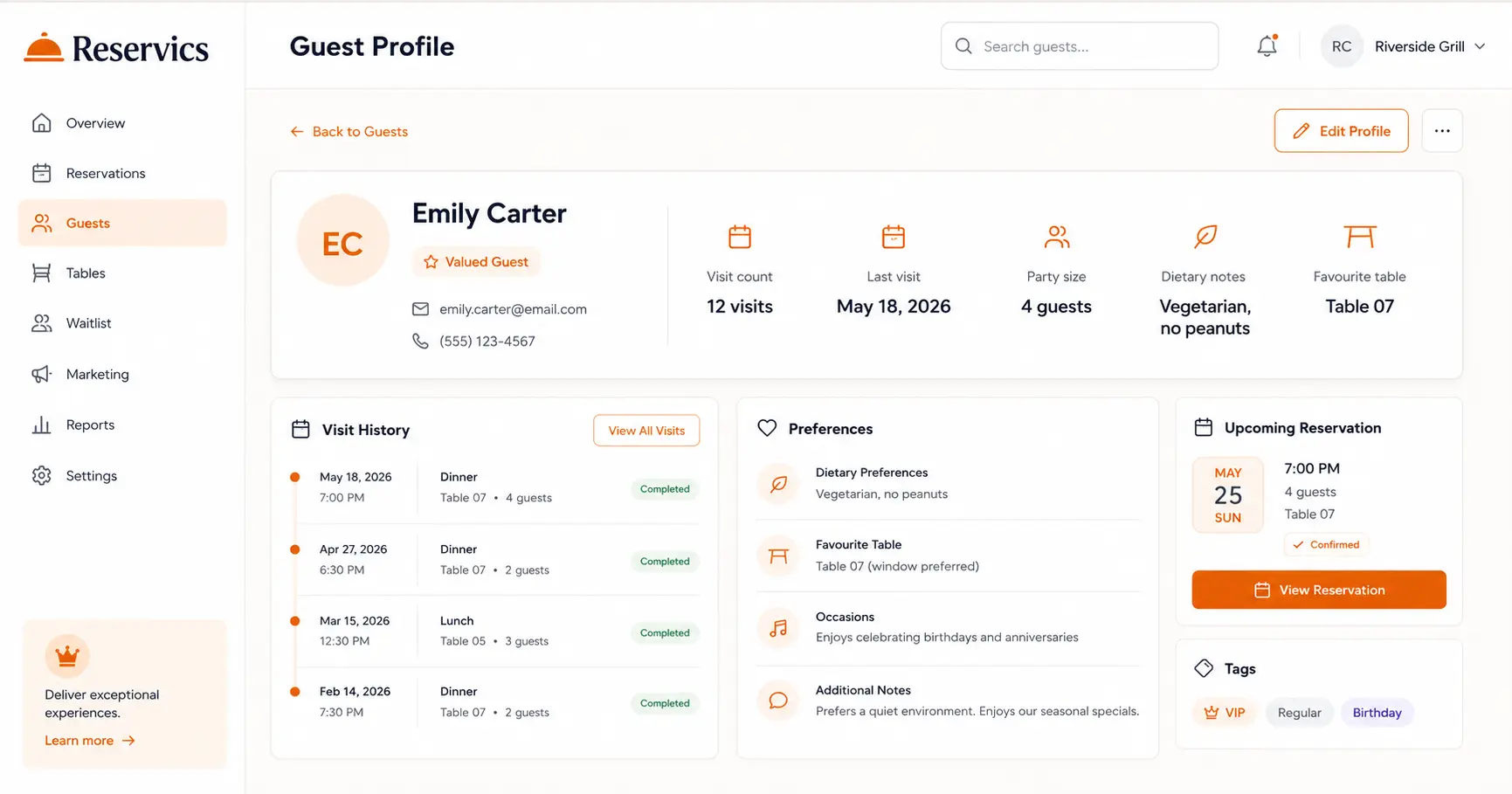
After just a few visits, a guest profile can tell you:
- Their name and contact details
- How many times they have visited and when
- Their typical party size
- Any dietary requirements or allergies noted at booking
- Which table they usually sit at
- Whether they have a birthday or anniversary on record
- How long ago their last visit was
None of this requires your staff to manually take notes or fill in spreadsheets. It builds automatically every time a guest books.
The question is what you do with it.
5 Ways to Use Guest Data to Drive Return Visits
1. Greet Them by Name Before They Say a Word
Before service starts, your front-of-house team reviews the booking list for the session. For any guest with a previous visit on record, the host knows their name, party size, and any notes before the guest reaches the door.
Being greeted by name when you walk in is rare. It is the kind of detail guests mention when they tell friends about a restaurant. It costs nothing and takes about 30 seconds of prep.
2. Suggest Their Usual Table Automatically
If a guest always sits at table 6, or always asks for a corner booth, that preference is in their profile after their second visit.
When they book again, your team can assign that table before the guest even asks. When they arrive and are taken straight to their preferred spot without asking, it signals something important: you pay attention.
Small gestures like this are what separate a good restaurant from a favourite one.
3. Send a Birthday or Anniversary Message at the Right Moment
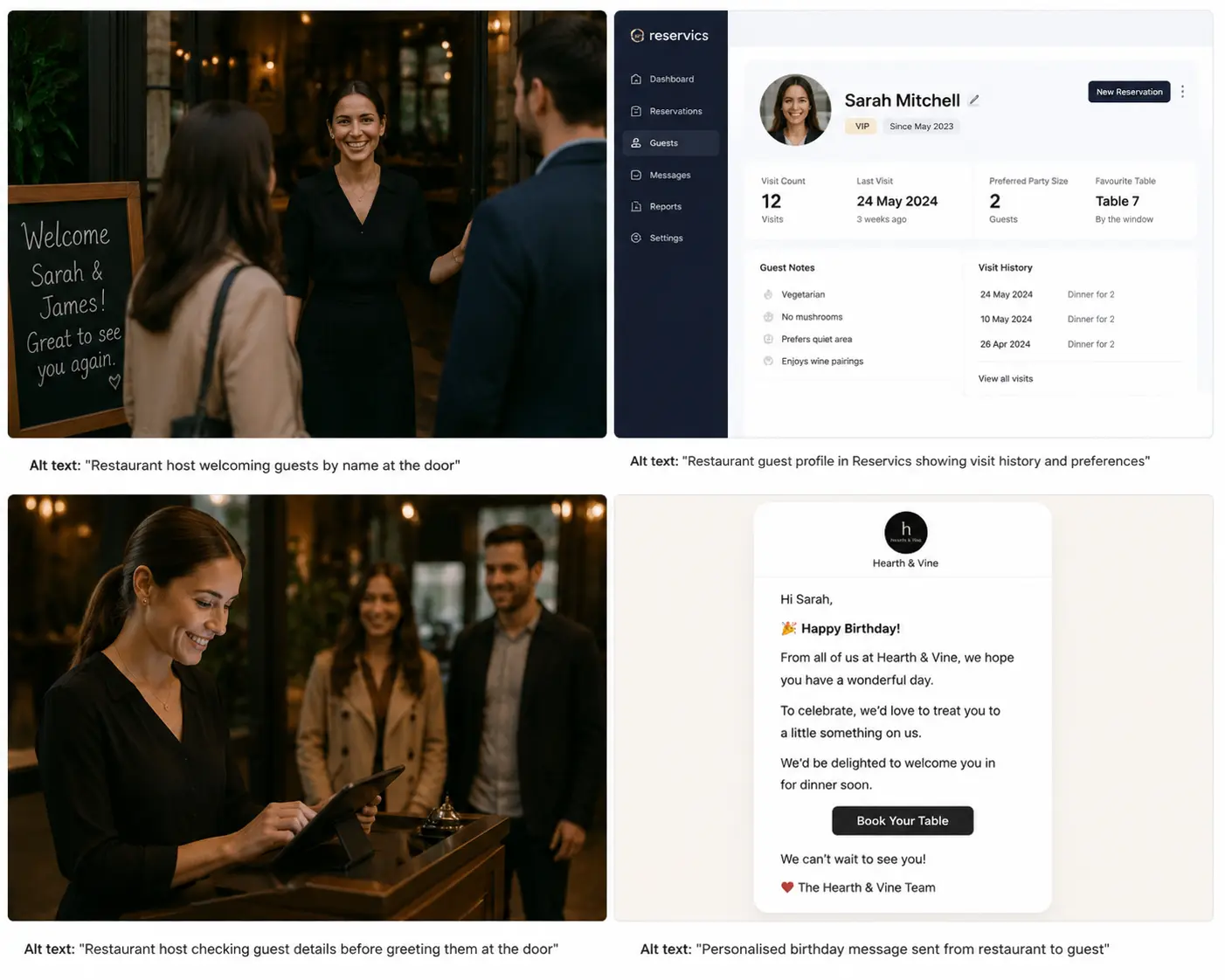
When a guest mentions a birthday or anniversary at booking, that date goes into their profile. Your system can then send a personalised message a week or two before the occasion with a warm invitation to come back and celebrate.
This is not aggressive marketing. It is a timely, relevant nudge that most guests genuinely appreciate.
The conversion rate on anniversary and birthday messages is significantly higher than general promotional emails because the timing is personal, not random.
4. Flag VIP Guests for Your Team Before Service
Not every returning guest is a VIP. But some guests visit frequently, spend consistently, and leave good reviews. These guests are worth more to your business than almost any new customer you could acquire.
Before a busy service, your team can see which bookings belong to frequent visitors. The kitchen knows. The host knows. The server knows.
This does not mean treating other guests poorly. It means making sure your best guests never have a reason to feel taken for granted.
5. Re-Engage Guests Who Have Gone Quiet
Guest profiles show you not just who has visited, but who has stopped visiting.
If a guest who previously came in every 6 weeks has not booked in 4 months, that is a signal worth acting on. A short, personal message acknowledging the gap and inviting them back, with no discount needed, can recover a lapsed regular at almost zero cost.
This kind of re-engagement is only possible if you have the data to see the gap in the first place.
How to Build This Without Adding Work for Your Staff
The most common objection to personalisation at this level is time. Restaurant teams are already stretched. Adding more tasks to a service does not work.
The key is that none of this should rely on memory or manual effort.
A booking system like Reservics builds guest profiles automatically from every reservation. Visit history, dietary notes, party size patterns, and special dates are captured at the point of booking without any staff input.
Before each service, the team gets a view of who is coming in, their history, and any relevant notes. No spreadsheets. No briefing documents. The information is already there.
The staff role shifts from data entry to simply using what is already in front of them.
What a Guest Journey Looks Like in Practice
Here is how a single guest can move from a first visit to a loyal regular using nothing but the data your booking system already collects.
Visit 1: A couple books online for a Friday dinner. They note a nut allergy in the booking form. They are seated, the allergy is flagged to the kitchen, they have a good experience.
Visit 2: They book again 5 weeks later. Their profile shows one previous visit and the nut allergy. The host greets them by name. The kitchen is already aware of the allergy before the order is taken. They feel noticed.
Visit 3: They book for a birthday. The occasion is in their profile. They receive a short message from the restaurant the week before. When they arrive, the team knows it is a birthday. A small gesture from the kitchen, a candle, a note, makes the evening memorable.
Visit 4 onwards: They are now regulars. They recommend the restaurant to friends. They are worth far more to the business than the cost of the small gestures that got them here.
None of this required extra staff time. It required the right system. It also required the bookings to come through your own site rather than a third-party network, which is exactly what our guide on how to build a restaurant website sets up.
FAQ
How many visits does it take to build a useful guest profile?
Useful data starts appearing after a single visit. Name, party size, dietary notes, and visit date are captured from the first booking. By the third visit, you have enough to make the experience feel genuinely personal.
Is storing guest data GDPR compliant?
In the UK and EU, storing guest data for personalisation purposes is permitted as long as guests are informed at the point of booking, data is stored securely, and guests can request deletion. Reservics handles data storage within these requirements. Always include a privacy note on your booking form.
Do I need to train my staff to use guest profiles?
Not extensively. The main change is adding a 5-minute briefing at the start of each service to review who is coming in and flag any returning guests or special occasions. Most teams adapt to this quickly because it makes their job easier, not harder.
Can I use this for single-location restaurants or is it only for chains?
Guest profiles are valuable at any size. A single-location neighbourhood restaurant with 10 covers benefits just as much as a multi-site group, because the relationship between staff and guests is already personal. The system just makes it consistent and scalable.
What if a guest books through a third-party platform?
Bookings made directly through your Reservics-powered booking page build guest profiles automatically. Third-party platform bookings may have limited data depending on what information the platform passes through. Direct bookings always give you the richest data.
TLDR
- Every booking your restaurant takes contains data that can turn a first-time visitor into a regular
- Guest profiles track visit history, dietary notes, favourite tables, and special occasions automatically
- Using that data to greet guests by name, suggest their usual table, and reach out on special occasions costs almost nothing
- Re-engaging lapsed guests with a personal message is one of the highest-return actions a restaurant can take
- None of this requires extra staff effort when the right booking system is in place
Start building guest profiles with every reservation.