
How to Reduce Restaurant No-Shows Without Scaring Guests Away


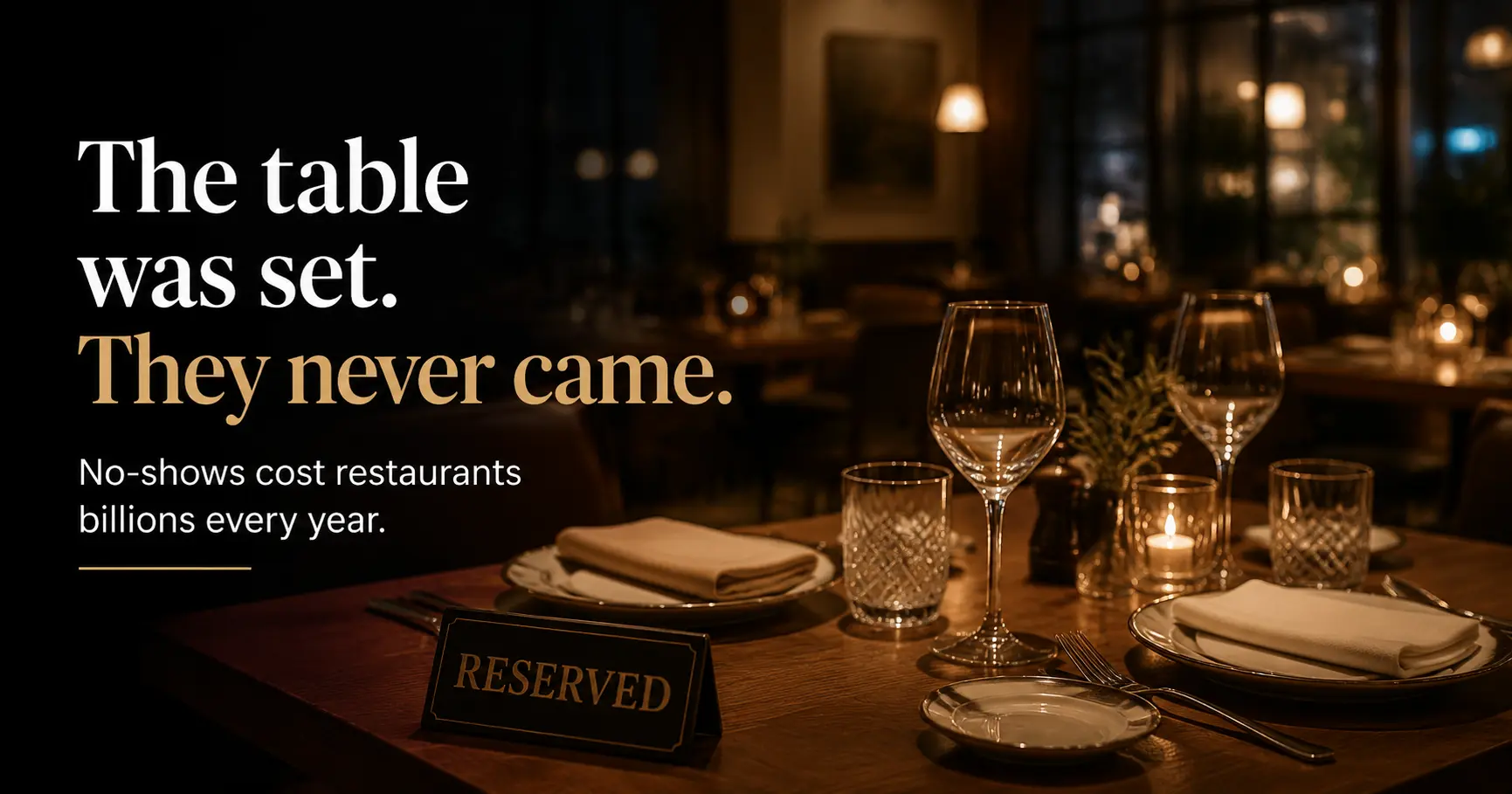
The table was set. They never came.
You blocked the prime 7:30 PM slot. You turned away a walk-in. Your staff prepped for a party of four.
Then nothing. No call, no message, no guest.
Restaurant no-shows cost the UK hospitality industry an estimated £17.6 billion a year. For an individual restaurant, even 2 to 3 no-shows on a busy Friday night can wipe out the night’s margin.
Getting strict feels tempting. Heavy fees, full prepayment, no exceptions. But that approach has its own cost: fewer bookings, worse reviews, and guests who go to your competitor instead.
The sweet spot is a deposit policy firm enough to make guests think twice before ghosting, and friendly enough that they don’t hesitate to book.
Here are 7 that work.
What you’ll learn:
- Why guests no-show (it’s rarely malicious)
- What makes a deposit policy backfire
- 7 deposit structures you can set up this week
- How to communicate your policy without sounding aggressive
💡 Short Answer: How to Reduce Restaurant No-Shows
The most effective approach combines a fair deposit policy, card-on-file booking, automated reminders, and an easy cancel or reschedule option. This gives guests flexibility while protecting your tables and revenue during peak hours.
Why Guests Ghost and Why It Is Rarely Bad Faith
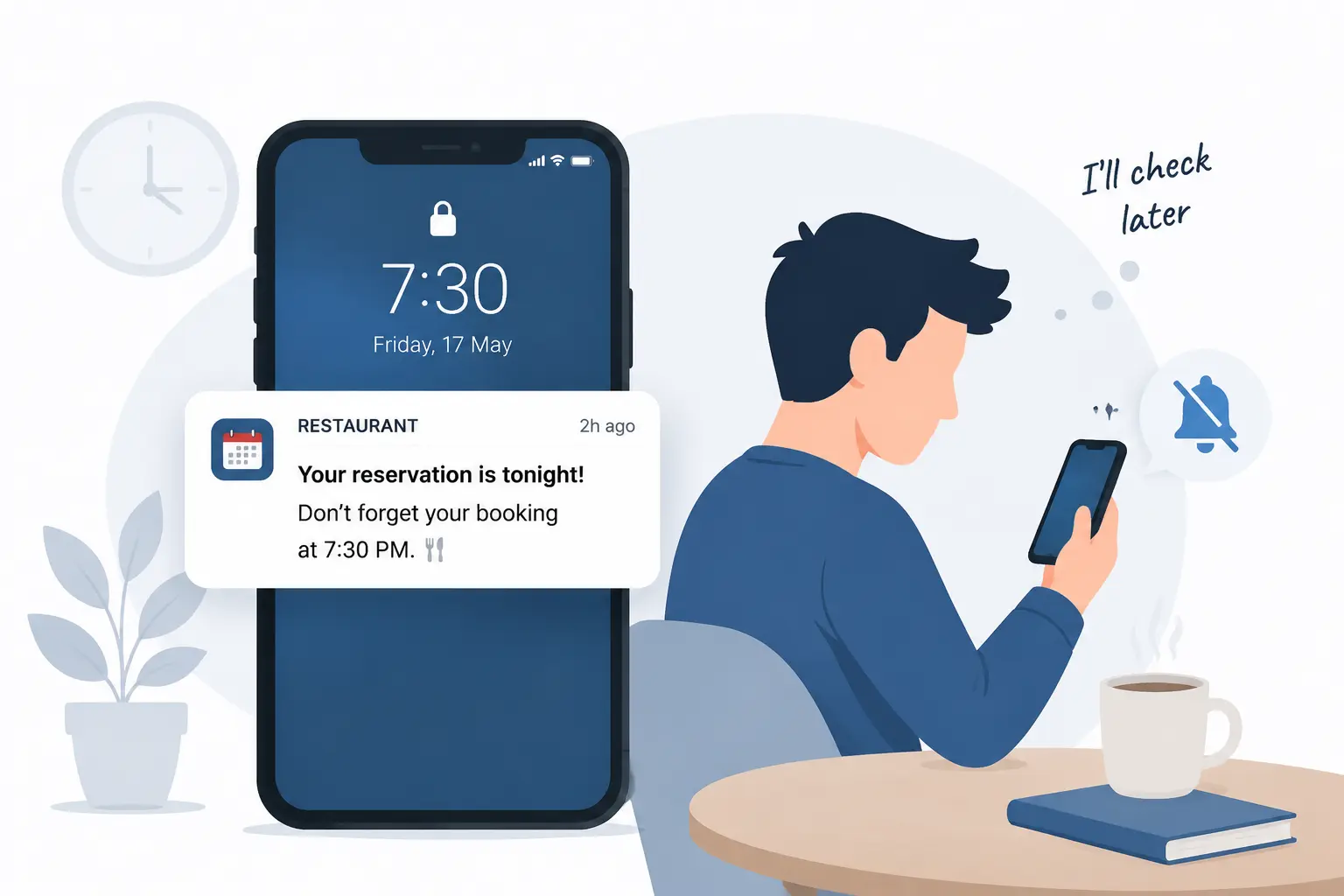
Most no-shows fall into three types:
The Forgetter – Booked three weeks ago, life got busy, no reminder reached them at the right time.
The Over-Booker – Made reservations at two restaurants for the same night, chose the other one, and never cancelled yours.
The Awkward Canceller – Wanted to cancel but felt embarrassed or could not find an easy way to do it. So they just did not show.
Knowing which type you are dealing with tells you which policy to use. Reminders fix the Forgetter. Easy cancellation fixes the Awkward Canceller. Financial commitment fixes the Over-Booker.
The best systems target all three at once.
What Makes a Deposit Policy Work and What Kills Bookings
There is a thin line between commitment and barrier.
A policy that feels punishing stops first-time guests from booking at all. A policy with no teeth gives guests nothing to lose.
The best policies share three traits:
- Communicated clearly upfront so there are no surprises at checkout
- Proportionate to the risk because a table of 2 on Tuesday and 8 people on Valentine’s Day are very different situations
- Include an easy exit because a cancellation window makes guests feel respected, not trapped
7 Deposit Policies You Can Use to Reduce Restaurant No-Shows
1. Partial Deposit for Groups of 4 or More
How it works: Charge a small per-head deposit (£5 to £10 per person) for bookings of 4 or more. The amount is deducted from the final bill.
Why it works: Large group bookings carry the most risk. A small per-head deposit creates enough accountability without making individuals in the group hesitate to confirm.
Best for: Casual dining, mid-range restaurants
2. Full Prepayment for Special Events and Peak Dates
How it works: For Valentine’s Day, New Year’s Eve, and set menus, charge the full per-head cost upfront.
Why it works: Guests booking a special occasion are already committed. Full prepayment confirms it financially and simplifies service on your busiest nights.
Best for: Fine dining, tasting events, holiday bookings
3. Card-on-File, Charge Only If No-Show
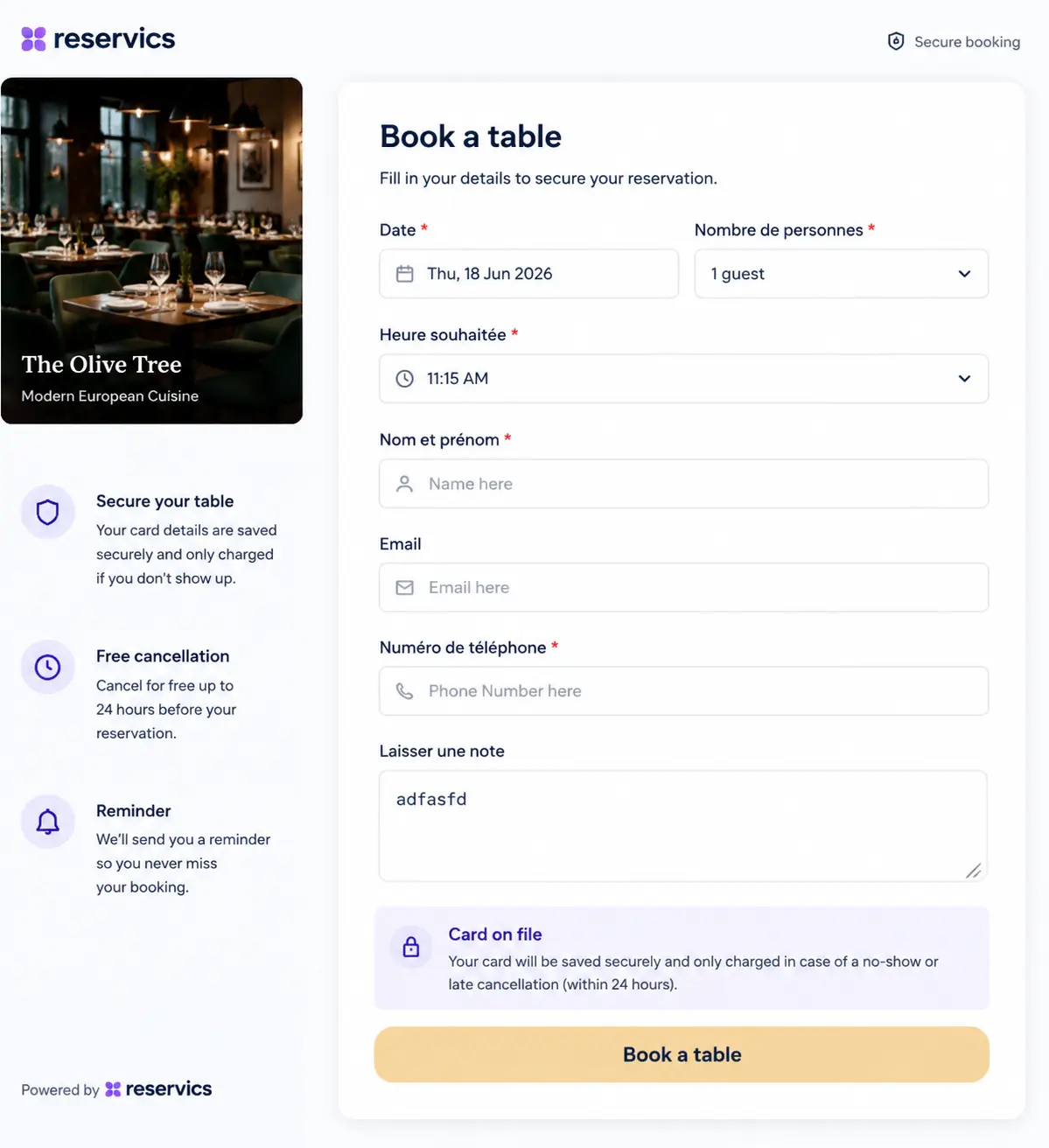
How it works: Guests save card details at booking. Nothing is charged unless they no-show or cancel inside the policy window.
Why it works: No upfront cost means low friction for first-time guests. But having a card saved creates real accountability. The psychological effect alone reduces no-shows significantly.
Best for: Mid-week bookings, new guests, casual dining
4. Free Cancellation Window, 24 or 48 Hours Before
How it works: Guests can cancel for free up to 24 or 48 hours before their booking. After that, the deposit is non-refundable.
Why it works: This respects genuine last-minute emergencies while eliminating casual no-shows. If the cancellation process is one click, most guests will use it and you will have time to rebook the table.
Best for: All restaurant types, and the most guest-friendly policy overall
5. Peak-Hours-Only Deposit
How it works: Deposits only apply to Friday and Saturday dinner slots, or whichever windows drive the most revenue. All other times are free to book.
Why it works: This signals that peak slots are genuinely in demand without making every booking feel like a financial commitment. It protects exactly the revenue you can least afford to lose.
Best for: Restaurants that want to stay accessible while protecting high-value sittings
6. Loyalty Exemption, Regulars Book Without a Deposit
How it works: Guests with 3 or more previous visits, tracked automatically by your booking system, are exempt from deposit requirements.
Why it works: It rewards loyalty, creates a reason to return, and signals genuine trust. It also feels personal because it is.
Best for: Neighbourhood restaurants, regulars-focused venues
7. Automated Reminders with One-Click Reschedule
How it works: Send automated reminders at 48 hours and again at 24 hours before the booking, with a clear link to cancel or reschedule in one step.
Why it works: This one change alone solves most Forgetters and Awkward Cancellers. If rescheduling takes 10 seconds, guests will do it and you will rebook the table instead of losing it.
Best for: Every restaurant, every booking type, always
How to Reduce Restaurant No-Shows Through Better Communication
The words around your policy matter as much as the policy itself.
❌ “A £10 per person deposit is required and is non-refundable if you cancel.”
✅ “We ask for a small £10 per person hold to secure your table. Cancel free up to 24 hours before and the hold comes off your bill on the night.”
Same policy. Completely different feel.
A few rules to follow:
- Lead with what guests get, which is a secured table and peace of mind, not what they owe
- Always mention the free cancellation window because it makes even a firm policy feel fair
- Show the policy in three places: booking page, confirmation email, and reminder so no one can say they did not know
Real Example: One Restaurant Reduced No-Shows by 43%
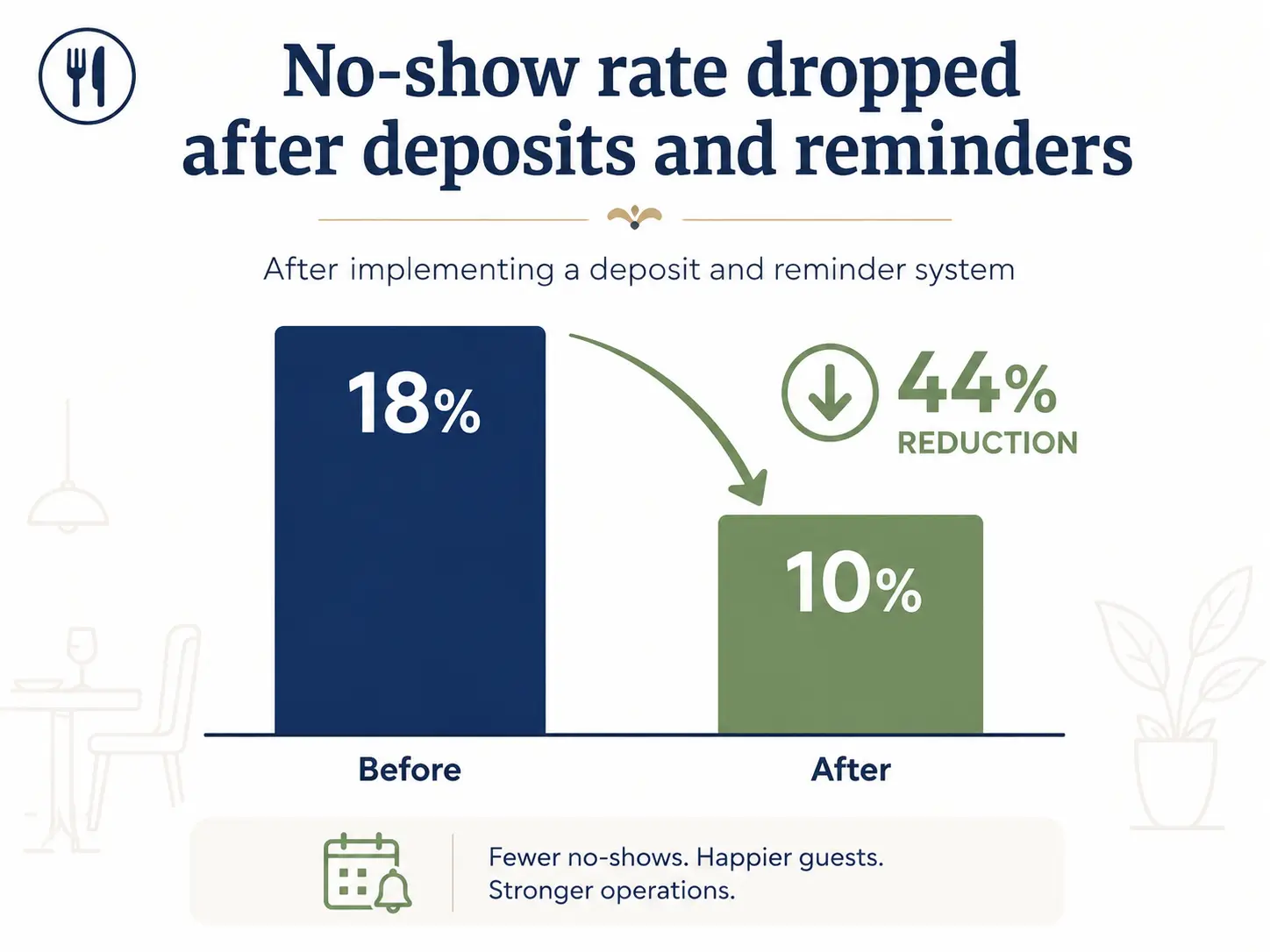
A 12-cover neighbourhood bistro was losing around 2 tables every Friday to no-shows, roughly £180 in missed revenue each week.
They made two changes:
- Added card-on-file for all Friday and Saturday bookings
- Set up automated reminders at 48 hours and 2 hours before the booking
Within 6 weeks their no-show rate dropped from 18% to just over 10%. Crucially, cancellations went up, which sounds bad but is not. Guests who were not coming started cancelling in time, freeing tables that were rebooked on the night. A deposit policy only works if guests can find the booking page in the first place, so if your site is still a work in progress, see our guide on how to build a restaurant website.
FAQ
How do I reduce restaurant no-shows without putting guests off?
Start with the least intrusive options first. Automated reminders and an easy reschedule link alone solve the majority of no-shows. For peak hours, add a card-on-file policy. Reserve full deposits for high-demand dates and large groups only.
Is it legal to charge a deposit for a restaurant booking?
In many places, restaurants can take deposits or charge cancellation fees. The policy should be clearly communicated before booking, reasonable in amount, and easy for guests to understand. Rules can vary by country, so check local requirements before publishing your policy.
What is a fair deposit amount for a restaurant?
Most restaurants find £5 to £15 per person works well for casual dining. Fine dining and set-menu events often use full prepayment. The key is that the amount feels proportionate to the experience, not punitive.
Will a deposit policy reduce my bookings?
A clearly communicated, fair policy typically has minimal impact on booking volume. Guests who are genuinely planning to come will not hesitate. The guests you may lose are largely those who would have no-showed anyway.
Should I always refund deposits for cancellations?
If the guest cancels within your stated free-cancellation window, yes, always. After the window or for a no-show, you are within your rights to keep the deposit. Being consistent about this in your communications protects you and builds trust with guests.
TLDR
- No-shows happen for 3 reasons: forgetfulness, over-booking, and awkward cancellations
- The best deposit policies are proportionate, clearly communicated, and include a free cancellation window
- Card-on-file and automated reminders solve most no-shows with minimal guest friction
- Loyalty exemptions reward regulars and make your policy feel personal, not punishing
- You do not have to pick one. Layer 2 to 3 policies based on booking size and time slot
Want to set any of these up in minutes?

1 Comments
[…] We covered the mechanisms in detail in How to Reduce Restaurant No-Shows Without Scaring Guests Away. […]